Impromptu Visits with Friends: A Lost Art

| | No Comments

During my childhood years, in the afternoon after school, I would go from house to house, rouse friends, and we would play our own variations of baseball, football, and cowboys and Indians. This typically took place in our front yards and in the street. In retrospect, I am not certain how much our neighbors appreciated their favorite bushes being designated as second base or a touchdown. However, in the process, we exercised our abilities to create our own fun. We would play all afternoon, and would spontaneously be invited to dinner at which ever homes we randomly would arrive at when it became dark.

How often do you hear of adults—or even children— just dropping in on one another now?  While “being neighborly” used to mean social calls with friends, now, for many in the United States, it often means respecting their privacy and leaving them alone. 

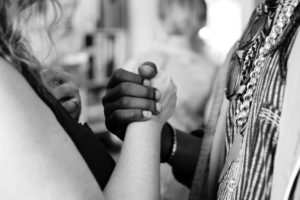
Ghanaian friends photo by Michael S. Lewis, M.D.

Friends at the market, Kumasi, Ghana, from my book Seeing More Colors: A Guide to a Richer Life

A few years ago, a study comparing relative levels of satisfaction in different countries was published; both Ghana and the United States were included.  Although its per capita income is a fraction of that in the United States, Ghana was higher on the satisfaction scale.  I happened to be training a Ghanaian resident physician at the time, and I asked him for an explanation.  He responded by relating a recent phone call that he had received from a friend back home.  His friend inquired, “Is it really true that before you visit someone in the United States, you must call them first to get permission?”  When the resident answered in the affirmative, his friend replied, “You must come home immediately.  How can you live in such a place?”

The one exception to this “leave them alone” philosophy in our culture comes in a time of crisis, when, thank goodness, friends usually can be counted upon for support. 

But why do we only need to reach out in a crisis?  In my book Seeing More Colors:  A Guide to a Richer Life, I share a quote from Eli Wiesel, who write in Against Silence, “Popular belief has it that true friendship can be ascertained only in time of need.  Not so; in happiness you will recognize your true friends.  They will not be envious.  You will usually find friends to feel sorry for you but rare are those who feel happy simply because you are happy.”

Among life’s great pleasures is celebrating with friends and, when rejoicing with them, I often think of Wiesel’s words.  Remembering the positive energy that I have felt from friends on my own happy occasions, I always attempt to fully participate in the joy of their special events.  We should exercise our capacity for celebration.

Summer Transitions: Balancing Individualism with Family

| | No Comments

This is a season of transitions. As schools close for the summer, college students return home after exams, and families embark on summer vacations, there’s an inevitable adjustment – sometimes uncomfortable – as each family member is thrown from the school year routine of individual trajectories into a sudden sense of enforced togetherness. This time can be particularly frustrating for the children in the family who’ve spent the year growing increasingly independent, but now feel they’re taking a step backward as they follow the dictates of the family unit. It can be equally jarring to the parents who find themselves refereeing a sudden spike in sibling squabbles and feeling guilty because they miss the quiet time they enjoyed on school days.

Observing how other cultures, as well as previous generations, have dealt with this issue is instructive. In my book Seeing More Colors: A Guide to a Richer Life, I give the following example. When my wife and I were in Bali, Indonesia, we had a guide who was a young father in his thirties. He proudly stated that he had just returned from a one-month vacation with his family, spent doing what gave him more joy than anything else imaginable: he constructed his father’s grave. The family and community are paramount in Bali. It is common to have several generations of a family living together in the same compound. Families belong to both clans and cooperative groups of neighbors called banjars, who assist each other at festivals, family gatherings, and at times of crisis. This model has worked for centuries. 

Grandmother and Grandchild from One World by Michael S. Lewis, M.D.

Grandmother and Grandchild, Cape Coast, Ghana, from my book One World: A View of Seven Continents

It is easy to understand the advantages of seeking opportunities wherever one finds them, such as accepting a job far from family roots, but there is a high price to pay. When my parents were growing up, there were always relatives living with them. My parents both came from large families that emigrated to the United States from eastern Europe and settled in Houston, Texas. There are countless family stories about more settled members helping new arrivals to become more established. The actions of the previous generations helped foster very close relationships in my generation. To this day, I have cousins who are like brothers and sisters.

In contrast, a considerable part of the mythology of the United States is centered around the exploits of heroic individuals, from the entrepreneur who starts his own company to the lone cowboy who explores the open range. A book that I have read many times through the years, Henry David Thoreau’s Walden emphasizes the importance of discovering things on your own.

Psychology professor David G. Myers writes in The Pursuit of Happiness, “We need to balance me-thinking with we-thinking.” Self-actualized people—those role models studied by my psychology professor Abraham Maslow—as well as many members of my own family and friends, appear to have achieved this balance. I admit it continues to be a struggle for me, but I find it helpful to remember Ralph Waldo Emerson’s philosophy:  The only gift is portion of thyself.

An early chapter in my book Seeing More Colors: A Guide to a Richer Life deals with the theme of focusing beyond oneself, a theme familiar to today’s students who aspire to build a strong high school or college resume and are told to build a list of community service activities to impress admissions committees. While many students might view this “requirement” in the same vein as SAT preparation or essay writing, there are a number who are surprised and delighted by the connection they forge with the people they serve, and they come away with a lifelong intention to help others, whether through occupational choice or charitable work. In this sense, admissions expectations are a gift. Here’s why.

Abraham Maslow, professor of psychology and my source of inspiration for Seeing More Colors observed that all “self-actualized” people—those role models whom we most admire—have a mission in life which focuses on problems outside of themselves. Feeling blessed with an abundance of personal gifts, they are generous toward others and desire to create an environment in which others can thrive. This includes finding a vocation that gives one the opportunity to make the world a better place. It is important to remember that each of us has a certain skill set with which we can make a unique contribution.

Himalayan Cataract Project

Himalayan Cataract Project

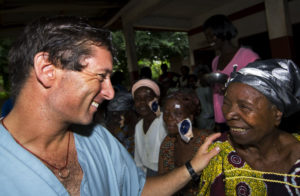
Self-actualized people know that one’s life is a gift to be shared. They devote themselves to making the world better for others. Geoffrey Tabin’s work exemplifies this principle. Dr. Tabin is co-founder, along with Dr. Sanduk Ruit from Nepal, of the Himalayan Cataract Project (HCP), an organization with the goal of eradicating preventable blindness worldwide. He not only performs surgery, but also teaches local doctors and nurses cataract surgery techniques. Together they have returned sight to more than five hundred thousand people. I was most fortunate to accompany Dr. Tabin to Ghana in 2007. During that two-week visit, he and his team performed more than four hundred cataract surgeries. People from remote areas, with little or no access to health care, underwent surgery, then were fed and housed overnight before being re-examined the next morning, all for no charge to them. People who had been blind or who had had minimal vision were able to walk away unaided, excited at the prospect of seeing their children and grandchildren—sometimes for the first time.

The literature of positive psychology presents several studies that show that helping others increases one’s likelihood of leading a more satisfying life. It’s a win-win situation. The more one gives, the more one receives. With this in mind, I donate the profits from the sale of my books, Seeing More Colors: A Guide to a Richer Life, One World: A View of Seven Continents, and Eagle Eyes, to the Himalayan Cataract Project.

As Martin Luther King, Jr. often preached, “Everybody can be great, because anybody can serve. You only need a heart full of grace, a soul generated by love.”

We all experience difficulties and emotional traumas throughout our lives, whether they are concerns about health, finances, family and friends, or other more global issues. In today’s times people of all ages are challenged and unsure of their futures.

My personal inspiration has been Abraham Maslow, considered by many to be the father of modern psychology. I met him in the 1960s while at Brandeis University, and he became a mentor to me. Maslow’s simple, yet revolutionary, approach to psychology makes him as relevant today, 40 years after his death. By studying the people we most admire, he identified characteristics that made them successful: among them, appreciating the moment, focusing beyond oneself, and cultivating a sense of humor.

For the past fifty years, I have thought about Abraham Maslow’s ideas every day. Initially they helped this frightened college freshman through difficult times, and they continue to do so today. They have enhanced my moments of greatest joy and transformed my life.

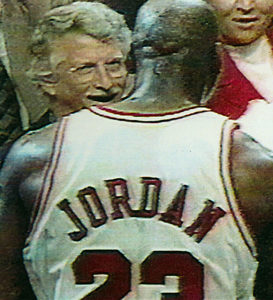
Seeing More Colors: A Guide to a Richer Life, by Michael S. Lewis, M.D.In March 2010 I published a book titled Seeing More Colors: A Guide to a Richer Life, a treasury of stories, quotations, and photographs woven around Maslow’s teachings. The stories told are those which have had a profound impact upon me—including my tenure as an orthopedic consultant to the world champion Chicago Bulls basketball team and the Chicago White Sox baseball team. Photographs I’ve taken during travels to seven continents illustrate Maslow’s ideas throughout the book.

Using Maslow’s ideas as a framework, Seeing More Colors demonstrates how each of us can lead a more rewarding life. I plan to outline some of these concepts in my blog in the hope that Maslow will change the way you see yourself and your world and provide a beacon of hope in these uncertain times.